


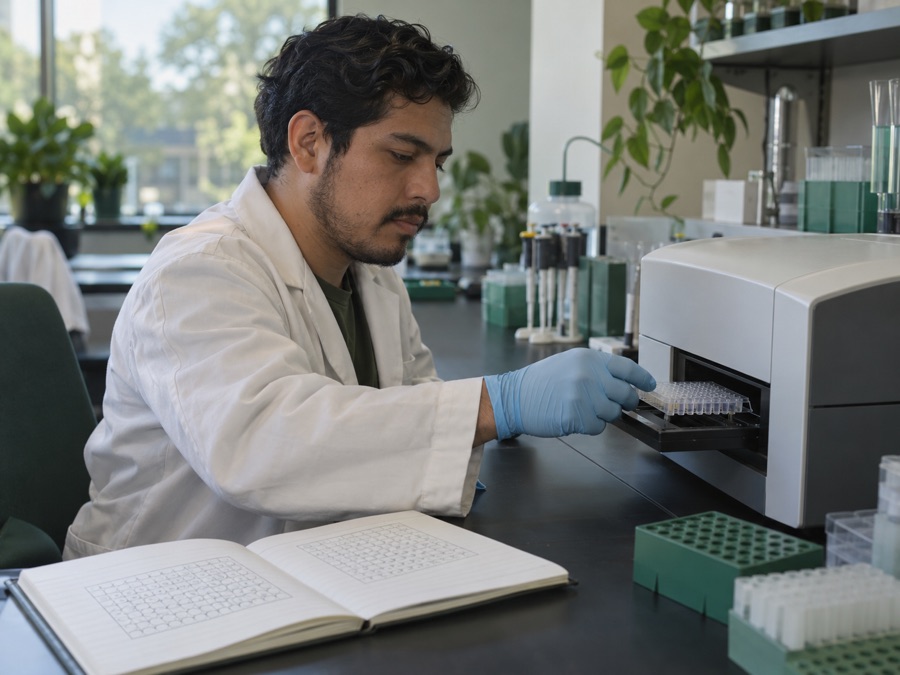


A scientist pipetting into a 96-well plate in a research lab

Your scientific judgment, paid at every level.

Paid, scoped reviews of real research records across biology, chemistry and materials. Whether you run the experiments, the program or the science of a whole company, there is a tier for you, and each one pays more.

Three tiers
Experiment, program, company
$75–400/hr
Pay rises with each tier
Three fields
Biology, chemistry, materials
Remote
Scoped briefs, paid weekly

Three tiers of judgment

We place you by the responsibility you have actually held, not by title or publication count. Each tier judges a larger share of a research archive, and pays accordingly.

Protocols and runs

You run the experiments

Hands-on method judgment

$75–140/hr

Your experience. You design, run, validate, troubleshoot or interpret experiments yourself.

What you review. Actual runs, controls, outputs and failure modes, and the context a record is missing.

  • Assay scientists
  • Analytical chemists
  • Method developers
  • Characterization specialists
Apply at this tier
Research programs

You run the program

Experimental strategy

$130–220/hr

Your experience. You owned a program’s hypothesis, experimental path, revisions and stop or continue calls.

What you review. Whether results and protocol changes actually support the decisions a program recorded.

  • Program leads
  • Project scientists
  • Discovery leads
Apply at this tier
The company portfolio

You ran the science at scale

Scientific portfolio judgment

$220–400/hr

Your experience. You set scientific direction, chose programs and allocated resources across many of them.

What you review. The evidence behind portfolio choices, and how the programs in an archive relate.

  • Fractional CSOs
  • Portfolio advisors
  • Former R&D leaders
Apply at this tier

Where each tier’s judgment applies

Company archive Tier 3 Program A Tier 2 Run 01 Run 02 Run 03 Run 04 Program B Run 01 Run 02 Failed run Run 04 Program C Run 01 Failed run Run 03 Run 04 Tier 1

Failed runs and stopped programs count. The reasoning around them is often the most valuable part of an archive.

Hourly rate by tier

1Experiment$75–140/hr $75–140
2Program$130–220/hr $130–220
3Company$220–400/hr $220–400

What moves your rate within a tier

  • Depth in the specific methods a brief needs
  • How scarce your field and techniques are
  • The size and complexity of the records you review

Each tier pays more because each judges a larger share of the record. Your rate is confirmed in writing before any brief.

Biology, chemistry and materials

Biology

  • Assay development
  • Cell and molecular biology
  • Imaging and microscopy
  • Discovery biology

Chemistry

  • Synthesis and reaction selection
  • Formulation
  • Analytical methods
  • Medicinal chemistry

Materials

  • Composition and process experiments
  • Synthesis and fabrication
  • Characterization
  • Candidate selection

Your first paid assignment

A short, scoped brief. You never see sensitive files before permissions are in place, and scope, fee and turnaround are agreed before you start.

  1. 1

    Review a permitted sample

    A scoped set of real research records, inside your own methods and level of judgment.

  2. 2

    Find the decision evidence

    What supports each call, what was revised, and what context is missing.

  3. 3

    Make a recommendation

    Pursue, request more, or pass, with your reasons written down.

  4. 4

    Shape the rubric

    Help build a reusable rubric that judges scientific records the way an expert would.

Who we’re looking for

Consultants, fractional scientific leaders, former program leaders and experienced practitioners. Employed scientists and academics are welcome too, once outside work is cleared with your employer.

You get one primary tier, based on what you designed, ran, decided or directed. Everything else you know becomes a tag on your profile, so you can still be matched to work outside your tier.

What we ask when you apply

  1. 1
    Domain and methods

    Your scientific area, the techniques you know, and how deep you go.

  2. 2
    Your personal contribution

    What you designed, ran, validated, troubleshot or interpreted yourself.

  3. 3
    One relevant example

    A single decision or experiment, described without confidential detail.

  4. 4
    How you can take part

    Availability, fee expectations, employer permission and any conflicts.

Start your application

Bring the judgment only experience gives.

Apply in about ten minutes. We will match you to a tier and a first paid brief that fits your methods.